
Eyelid surgery removes excess skin or fat from the upper or lower eyelids. It is often a shorter operation than other facial surgery, but bruising takes weeks to fade. In India it is done by plastic surgeons and by eye surgeons trained in oculoplastics.
At a glance
- Who should perform it
- Plastic surgeon or oculoplastic-trained eye surgeon, registered
- Trips to India
- Often one stay, including stitch removal
- Before you fly home
- 7–10 days after facial surgery (NHS)
- Recovery
- About 2 weeks off work; bruising fades over weeks (NHS)
What does the procedure involve?
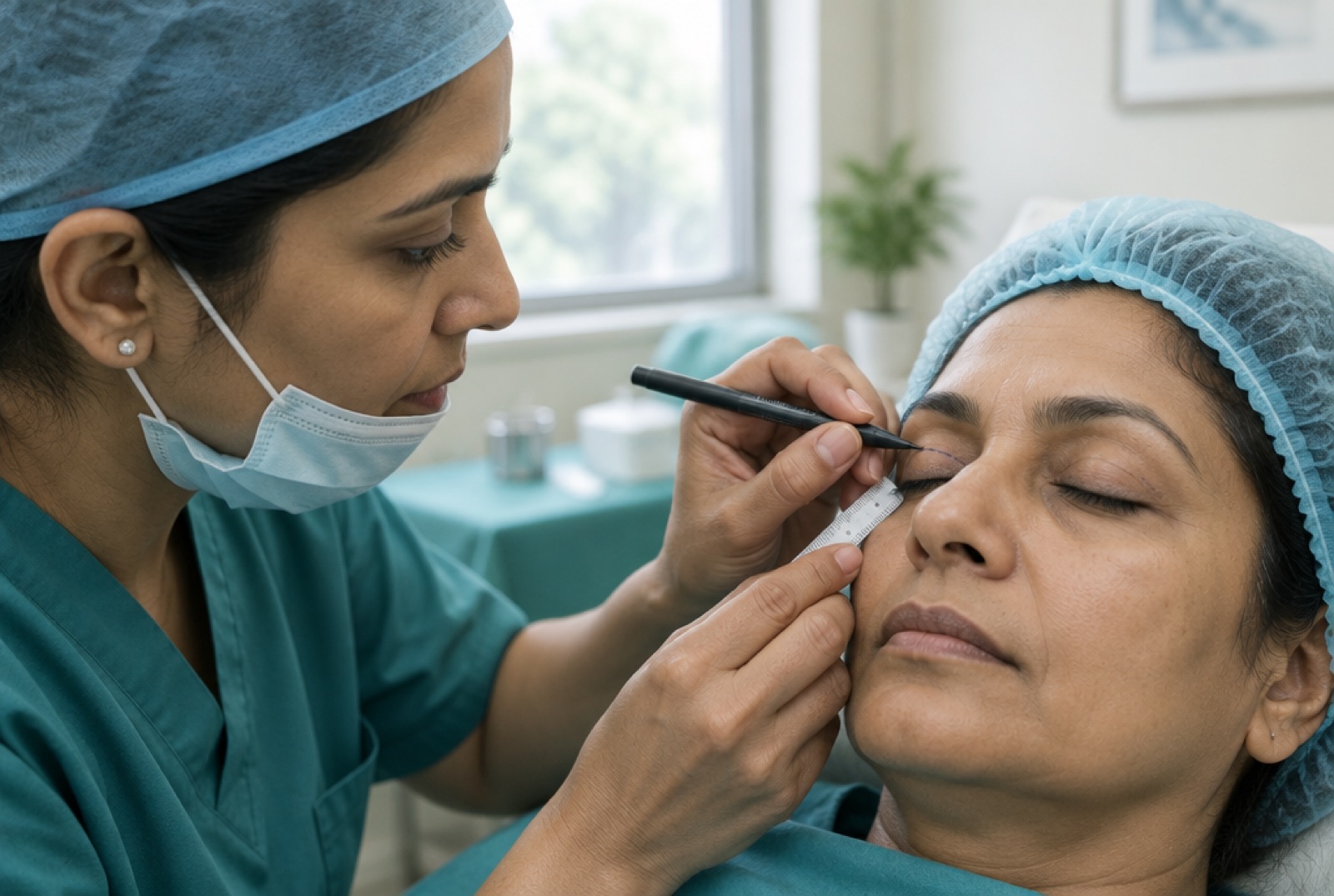
The surgeon makes cuts along the natural crease of the upper lid or just below the lower lashes, removes or repositions skin and fat, and closes the cuts with fine stitches.
Who is it usually for?
- Adults with hooded or heavy upper lids, including when they affect vision
- People with bags under the eyes
- People without untreated dry eye or thyroid eye disease, which the surgeon will check
Suitability is decided by your surgeon after an assessment. This list is general.
How do I choose a qualified surgeon in India?
- In India, aesthetic surgery should be done by a plastic surgeon with an MCh or DNB in Plastic Surgery. Skin and hair procedures may also be done by a dermatologist with an MD or DNB in Dermatology. That is the position of the National Medical Commission’s 2022 guidelines.
- Ask for the surgeon’s full name and medical registration number, then check it yourself on the NMC Indian Medical Register.
- Meet the surgeon who will operate, not only a coordinator. We arrange a video consultation before you travel and an in-person one on arrival.
- Ask where the operation will take place. We work with accredited hospitals rather than stand-alone clinics for surgery under general anaesthesia.
How should I plan the trip?
A consultation, the procedure and stitch removal can often fit into one stay. The NHS advises waiting 7 to 10 days after facial procedures before flying.
What does recovery look like?
The NHS says most people take about 2 weeks off work and that bruising takes several weeks to fade.
Your treating surgeon gives you a written plan for your own recovery and follow-up.
Questions to ask before you book
- What qualification and registration do you hold, and how many of these operations do you perform?
- What can this procedure realistically change for me, and what can it not?
- What are the risks for someone with my health history?
- How many days must I stay in India before you are happy for me to fly?
- Who looks after me if there is a complication after I go home?
What to prepare for your case review
- A recent eye examination, including any dry-eye diagnosis
- Glasses or contact lens prescription
- Photographs if the surgeon asks for them
What does it cost?
We do not publish prices. Cost depends on your case, the surgeon, the materials and the length of stay, so a single number would mislead you. Through the free case review you receive written estimates from the clinics and hospitals themselves.
Medical decisions
IndiaMedica is not a hospital or clinic and does not give medical advice. We do not show before-and-after photographs because results vary from person to person. Your treating surgeon decides on your treatment.
Sources
- NHS — Eyelid surgery
- NMC guidelines on aesthetic surgery and hair transplant, Sept 2022 (as reported by Medical Dialogues)
- NMC — Indian Medical Register (search a doctor’s registration)
- NHS — Cosmetic surgery abroad
- BAPRAS — Cosmetic surgery abroad
Checked
Questions patients ask
Can upper and lower lids be done together?
Often, yes. Your surgeon will advise based on your examination.