

Glossary term · Clinical terms
Tumour board (also: Tumor board, Tumour board review, Cancer MDT meeting): A tumour board is a regular meeting where cancer doctors and other specialists review new and complex cases and agree a treatment plan together.
A tumour board is a regular meeting where cancer specialists discuss a patient’s case and agree a plan as a group. The US National Cancer Institute says members can include medical oncologists, radiation oncologists, surgeons, pathologists, radiologists, genetics experts, nurses, physiotherapists and social workers. Many cancer patients travelling to India ask whether their case will be presented to one.
Why does a tumour board matter?
Cancer care often combines surgery, drugs and radiation. A group review means each specialist sees the same scans and pathology at the same time. NCI describes the goal as deciding together on the treatment plan for the patient.
What does the board need to review?
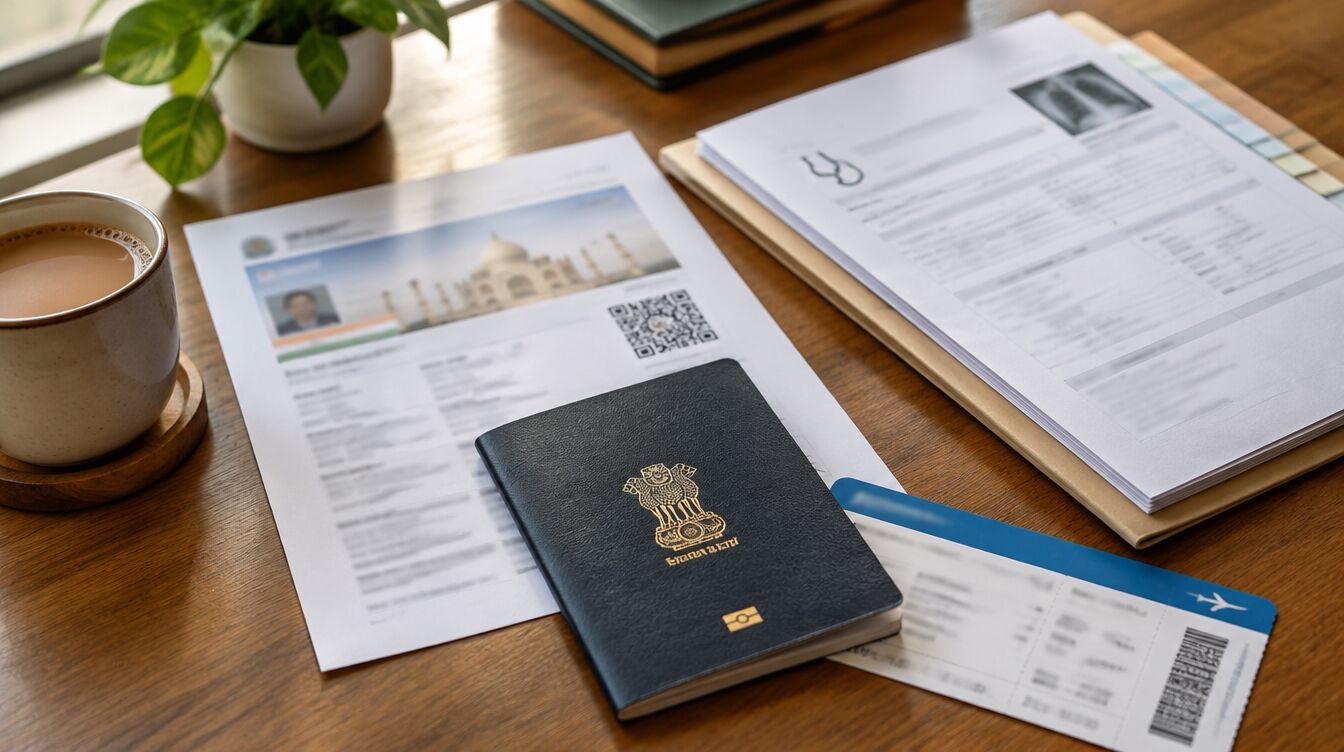
- The histopathology report and, where needed, the slides or blocks for review.
- Recent scans as DICOM files, such as CT, MRI or PET-CT.
- Details of any treatment already given.
- Your general health, other conditions and medicines.
Missing items can delay the review. Send complete records with your case review.
Questions to ask an Indian hospital
- Will my case be discussed at a tumour board, and when does it meet?
- Which specialists attend?
- Will I receive the board’s recommendation in writing?
- Will the pathologist review my original slides?
A recommendation, not a promise
A tumour board gives a recommended plan. It is not a prediction of outcome. Your treating oncologist explains the options, risks and alternatives with you.
Questions people ask
Can a tumour board review my case before I travel?
Some hospitals present remote cases at their tumour board using shared records. Others prefer to examine you first. Ask the hospital which approach it follows and what records it needs.
Is a tumour board the same as a multidisciplinary team?
They are closely linked. A multidisciplinary team is the group of specialists. The tumour board is the meeting where that team reviews cases together. You may hear either term from an Indian cancer hospital.
Sources
- NCI Dictionary of Cancer Terms: tumor board review
- National Cancer Institute: Surgical pathology reports
General information, not medical or legal advice. Rules change: confirm with the official source. Your treating specialist decides on suitability, treatment and length of stay. How we write and check.