

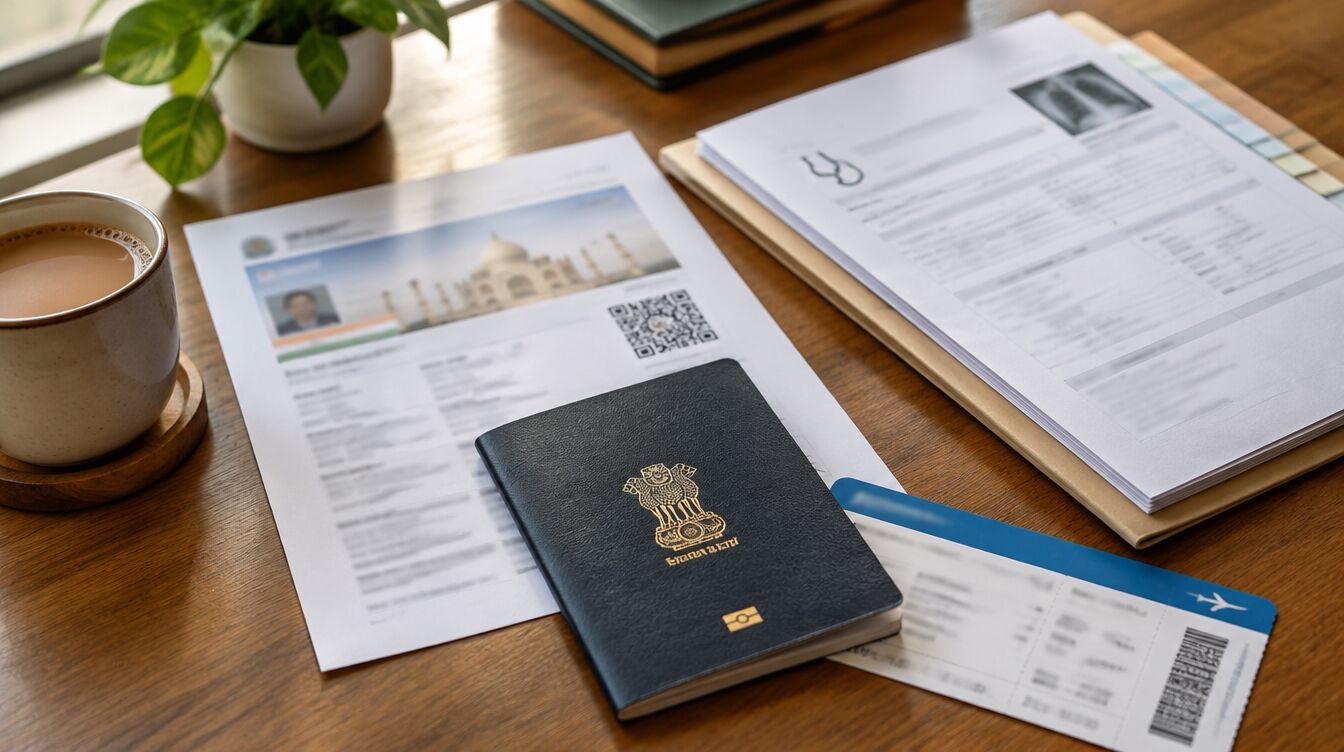
Checklist
For a cardiac opinion, send your coronary angiography images and report, a recent echocardiogram report, an ECG, recent blood tests, a list of medicines and summaries of any earlier heart procedures. The angiography images matter most for blocked arteries, because they show where and how severely arteries are narrowed. Ask the reviewing hospital which reports it needs.
Cardiac specialists form an opinion from images and measurements. MedlinePlus explains that coronary angiography shows whether the heart has a normal blood supply and, if not, how many arteries are blocked, where and how severely. An echocardiogram uses ultrasound to show how the heart beats and how its valves work. The US National Heart, Lung, and Blood Institute notes that doctors may use heart imaging before bypass surgery to judge disease severity. Collect what you have, label it clearly and send it together. A complete file usually means fewer follow-up questions and a faster answer.
Which imaging should you send?
- Coronary angiography images on disc or as a download link, plus the written report.
- Echocardiogram report, ideally from the last few months; ask the hospital what it considers recent.
- Any CT coronary angiogram, cardiac MRI or nuclear scan, with images and reports.
- Stress test report, such as an exercise ECG or stress echo, if you had one.
- Chest X-ray report, if recent.
Which tests and readings help?
- A recent resting ECG, as a clear scan or photo of the full tracing.
- Recent blood tests including blood count, kidney function and HbA1c if you have diabetes.
- Cholesterol results, if available.
- Your usual blood pressure readings and weight.
- Any Holter or rhythm monitoring reports.
What history should you include?
- Discharge summaries from any heart attack, angioplasty, stenting or surgery.
- Stent or valve details: type, date and location, from your device card or report.
- Pacemaker or defibrillator details, if you have one.
- Other conditions such as diabetes, kidney disease, stroke or lung disease.
- Allergies, especially to contrast dye or medicines.
Which medicines should you list?
- Every medicine with its generic name, dose and how often you take it.
- Blood thinners and antiplatelet medicines, clearly marked.
- Supplements and herbal products.
- Any medicine you stopped recently and why.
How should you send them?
- Scan reports as PDF files, one file per report, named by date and test.
- Send imaging as a viewer link or DICOM files, not photos of a screen.
- Write a short note of your main symptoms and what you want to know.
- Keep originals at home and bring copies when you travel.
Tip: print this page or save it as a PDF from your browser’s print menu.
Your cardiologist decides
A review of reports gives an opinion, not a final plan. The treating cardiac team decides what is suitable after examining you and may repeat some tests in India.
Questions people ask
Is the angiography report enough without the images?
Often not. The images let the reviewing cardiologist judge the narrowing themselves and plan any procedure. Ask the hospital that did your angiography for a disc or secure download link. Send the written report as well.
What if my echocardiogram is old?
Send it anyway and say when it was done. The reviewing team may ask for a new one before advising, or repeat it after you arrive. Older reports still help show how things have changed over time.
Do I need to stop any medicines before sending reports?
No. Sending reports does not require any change to your medicines. Never stop a heart medicine without advice from your own doctor. Simply list everything you take accurately, including doses, so the reviewing cardiologist sees the full picture.
Sources
- MedlinePlus: Coronary angiography
- MedlinePlus: Echocardiogram
- NHLBI: Preparing for coronary artery bypass grafting
General information, not medical or legal advice. Rules change: confirm with the official source. How we write and check.