

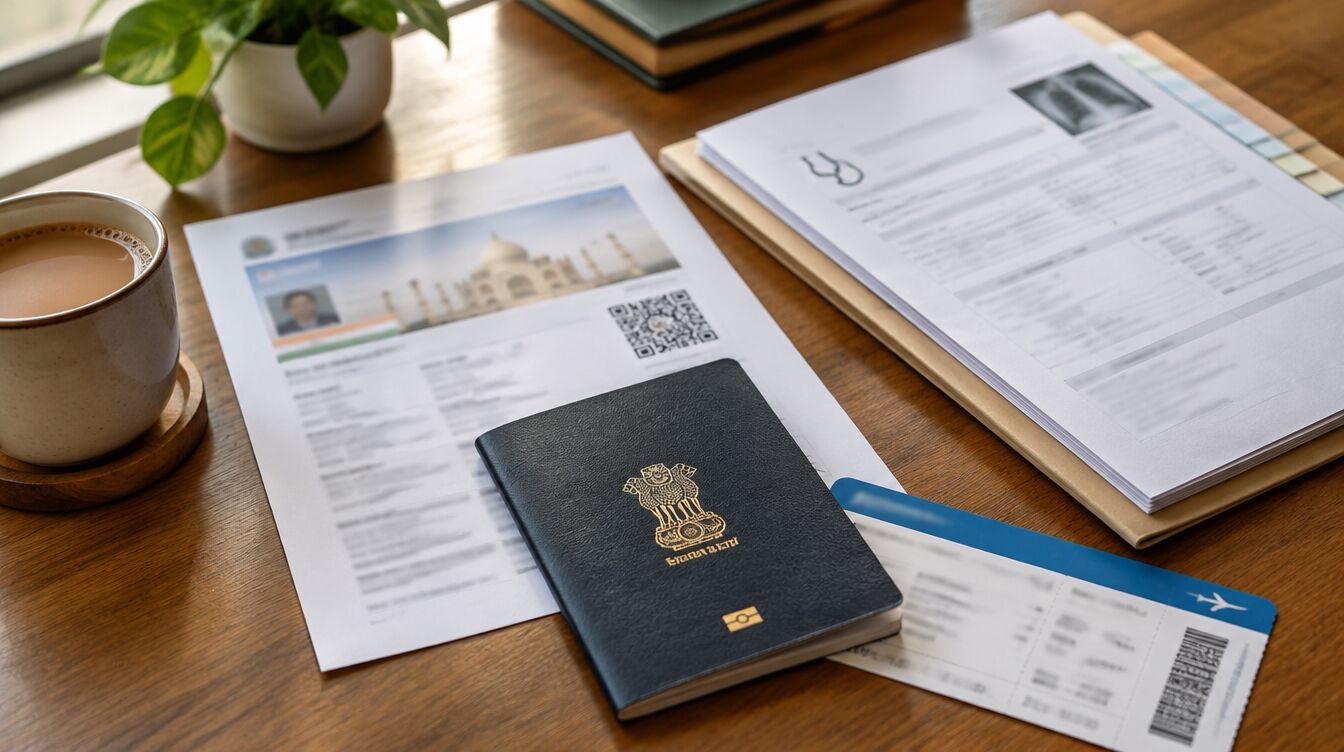
Checklist
Pack for treatment in India in three layers: documents that get you through immigration, records that let the hospital treat you safely, and comforts that make a hospital stay and recovery easier. Keep documents and medicines in your hand luggage. Print this list, tick each line and give a copy to your attendant so two people know where everything is.
A medical trip is not a holiday trip. The things that matter most are paper and medicine: your passport and e-Visa approval, a complete set of reports, and enough of your regular medicines to cover delays. A missing echo report or a forgotten insulin pen is far harder to replace than clothes. The e-Visa portal asks travellers to carry a printed copy of their Electronic Travel Authorization. Health agencies such as NHS fitfortravel advise keeping medicines in hand luggage in their original packaging. The lines below build on that advice.
Which travel documents should be in your hand luggage?
- Passport with at least six months’ validity and at least two blank pages, as the e-Visa portal requires.
- Printed copy of the e-Medical visa approval (ETA) showing ‘GRANTED’, plus a copy for each e-Medical Attendant.
- The hospital’s letter on its letterhead stating your name, nationality, passport number and planned admission date.
- Photocopies of your passport bio page and visa, kept separately from the originals.
- Travel insurance policy number and the insurer’s emergency telephone number.
- Return ticket details, even if the date is still open.
- Names and phone numbers of your case manager and the hospital’s international patient desk.
- Emergency contact at home, written on paper.
Which medical records should you carry?
- All reports you sent for the case review, printed and in date order.
- Original scan discs or download links for CT, MRI, PET-CT or angiography images.
- Pathology or biopsy reports, and the slides or blocks if your specialist asked for them.
- A one-page summary of your diagnoses, past operations, allergies and blood group.
- Discharge summaries from any earlier hospital stays.
- A letter from your home doctor listing current treatment, if you have one.
- A list of implants or devices such as stents, pacemakers or joint replacements, with any device cards.
What medicines and supplies should you pack?
- All regular medicines in their original labelled packs, enough for the whole trip plus extra for delays.
- A copy of each prescription showing the medicine name, dose and duration.
- A written list of every medicine by its generic name, dose and reason for taking it.
- Medicines split between two hand-luggage bags, so one lost bag does not leave you without them.
- Any supplies you use daily, such as glucose test strips, lancets, inhaler spacers or compression stockings.
- A doctor’s letter for needles, syringes or liquids over airline limits.
- Ask your treating specialist before travel which medicines to stop or continue before surgery.
What makes a hospital stay more comfortable?
- Loose front-opening tops and trousers with an elastic waist that fit over dressings.
- Slip-on shoes or sandals with a firm grip.
- Earplugs, an eye mask and a long charging cable.
- Reading glasses, hearing aids and spare batteries.
- A small notebook and pen to write down questions for the doctors.
- Ask the hospital what it provides for patients and attendants before you pack toiletries and bedding.
What should the attendant pack?
- Their own passport, e-Medical Attendant visa copy and travel insurance details.
- A folder with copies of all the patient’s documents and records.
- Their own regular medicines and prescriptions.
- A power bank and an adaptor for Indian sockets.
- A list of the patient’s medicines and allergies.
Tip: print this page or save it as a PDF from your browser’s print menu.
Keep it in your hand luggage
Documents, scan discs and medicines should never go in checked baggage. Health agencies note that checked suitcases can be delayed or lost. If anything is missing on arrival, tell your case manager the same day.
Questions people ask
Can I carry my medicines to India in their boxes?
Yes. Keeping medicines in their original labelled packs with a copy of the prescription is the usual advice from health agencies. India’s drug regulator allows small quantities for personal use in a passenger’s baggage. Controlled medicines need extra care, so read our guide on carrying prescription medicines to India before you travel.
Do I need to bring printed reports if I emailed them already?
Yes, bring printed copies and the original image discs. The treating team may want to review the original images rather than a summary. Printed copies also help if a phone or laptop fails, and they make it easy to show a report to a doctor during an appointment.
What should I leave at home?
Leave valuable jewellery and large amounts of cash at home. Ask the hospital what secure storage it offers on the ward. Bring only what you need for the stay, plus clothes that are easy to wear after an operation.
Sources
- Government of India e-Visa portal: e-Medical and e-Medical Attendant visas
- NHS fitfortravel: Travelling with medicines
- CDC Yellow Book: Medical Tourism
General information, not medical or legal advice. Rules change: confirm with the official source. How we write and check.