

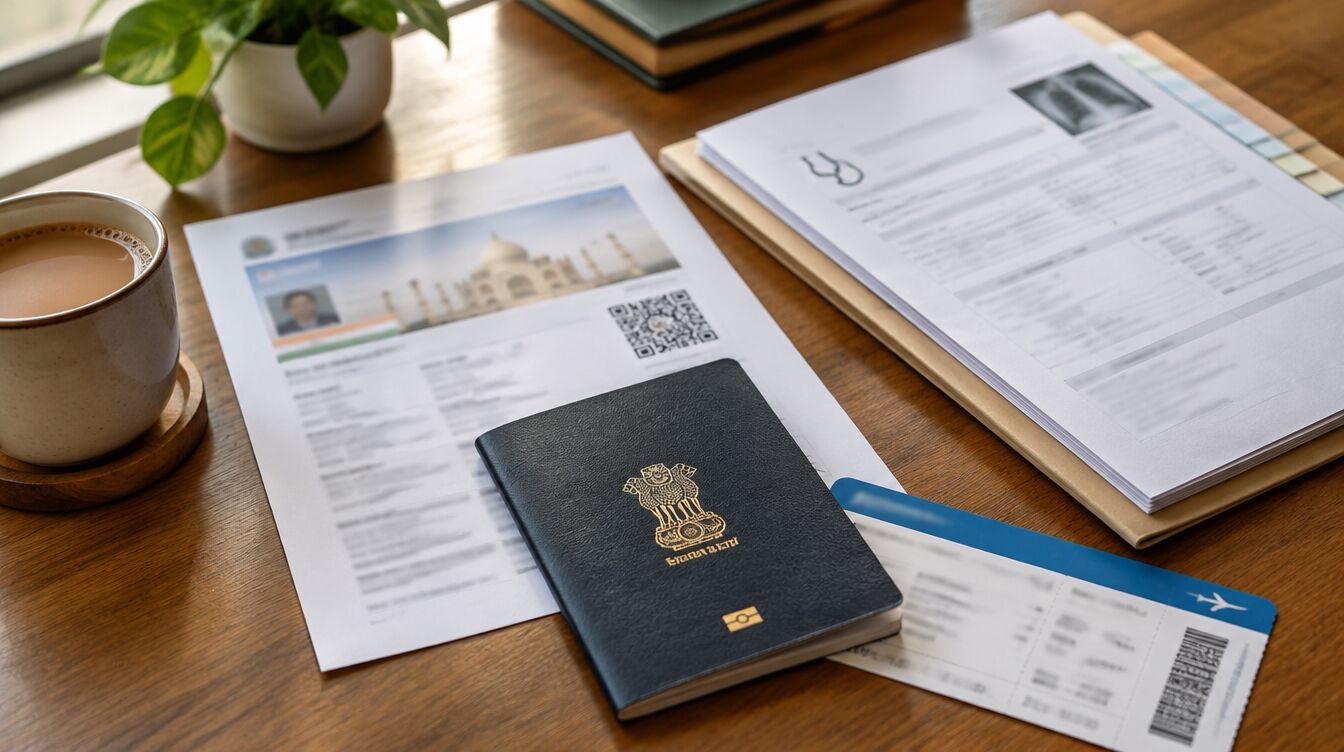
Checklist
You can carry prescription medicines to India for your own use in your baggage, with a prescription that names the medicine, quantity and duration. India’s drug regulator, CDSCO, allows up to one hundred average doses of any single drug as personal baggage, declared to Customs if asked. Larger quantities sent separately need a permit. Controlled medicines need extra checks.
CDSCO explains that Rule 36 of the Drugs and Cosmetics Rules lets passengers bring small quantities of drugs for personal use as part of their bona fide baggage. The quantity of any single drug should not exceed one hundred average doses. Drugs not carried in baggage need an application on Form 12-A and a permit on Form 12-B, supported by a prescription from a registered medical practitioner. Health agencies add practical advice. The CDC and NHS fitfortravel recommend original labelled packs, hand luggage, a doctor’s letter with generic names and extra supply for delays.
Which documents should you carry?
- A prescription that names each medicine, the quantity and the duration of treatment.
- The prescriber’s registration number on the prescription, as CDSCO asks.
- A doctor’s letter listing each medicine by generic name, dose and the condition it treats.
- A typed list of all your medicines to show the hospital pharmacist.
- Translations, if your prescription is not in English.
How should you pack medicines?
- Keep every medicine in its original labelled pack with the leaflet.
- Carry medicines in hand luggage, not checked bags.
- Split supplies between two bags in case one is lost.
- Pack enough for the whole trip plus extra for delays.
- Keep insulin and other cold-chain medicines as the manufacturer advises.
- Carry a doctor’s letter for needles, syringes or liquids above airline limits.
How much can you bring?
- Keep each medicine within one hundred average doses, the CDSCO personal-baggage limit.
- If you need more, ask CDSCO about a permit before travel.
- Declare medicines to Customs if an officer directs you to.
- Bring only medicines for your own use, not for others.
What about controlled medicines?
- Check with the Indian embassy whether any of your medicines are controlled in India.
- Strong painkillers, sleeping tablets and some anxiety medicines may be controlled.
- Carry the prescription and medical documents for any controlled medicine.
- Check the rules of every transit country too.
- Ask your doctor about alternatives if a medicine is restricted.
What should you tell the hospital?
- Give the full medicines list to the admitting doctor.
- Ask which medicines to stop or continue before surgery.
- Ask whether the hospital will supply your medicines during the stay.
- Confirm what you should take home after discharge.
Tip: print this page or save it as a PDF from your browser’s print menu.
Never stop a medicine on your own
Your treating specialist decides which medicines to pause before a procedure and when to restart them. Do not stop blood thinners, insulin or heart medicines without that advice.
Questions people ask
What does one hundred average doses mean?
It is the CDSCO limit for any single drug carried as personal baggage. For a tablet taken once a day, it means up to one hundred tablets of that medicine. For anything unusual, check with CDSCO or your embassy before travel.
Do I need a permit to carry my regular medicines?
Not usually, if they are in your baggage, for your own use and within the personal limit. CDSCO describes a permit on Form 12-B for drugs not carried in baggage or above the limit. Controlled medicines may have extra rules.
Can I buy my medicines in India instead?
Many medicines are available in India, but brand names and strengths may differ. Bring enough for the whole trip so there is no gap. Ask the hospital pharmacy before relying on local supply.
Sources
- CDSCO: Import of small quantities of drugs for personal use
- CDC Yellow Book: Traveling with Prohibited or Restricted Medications
- NHS fitfortravel: Travelling with medicines
General information, not medical or legal advice. Rules change: confirm with the official source. How we write and check.