

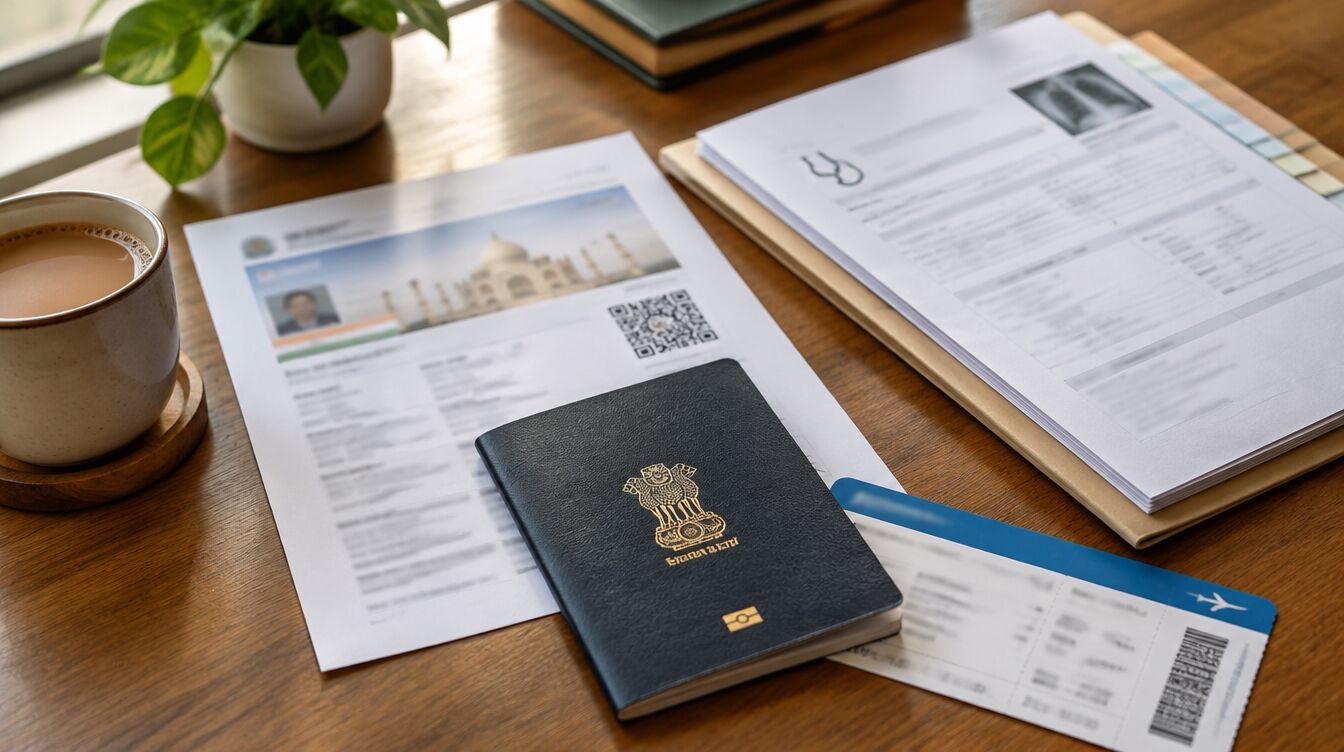
Checklist
Before you fly home, ask your surgeon to confirm in writing that you are fit to fly, what to do about blood clot risk on the flight, which medicines and documents you need, whether the airline needs medical clearance, and who will continue your care at home. The decision about when it is safe to fly belongs to your surgeon.
Surgery and air travel each raise the risk of blood clots, and long periods of sitting add to it. The CDC Yellow Book gives general guidance against flying within ten days of chest or abdominal surgery and cites advice to wait seven to ten days after cosmetic procedures to the face, eyelids or nose. These are general figures, not personal advice. The UK’s TravelHealthPro advises asking your doctor whether you are fit to fly and checking whether the airline will carry a recovering passenger. Use these questions at your final review.
Am I fit to fly?
- Have you examined me and confirmed I am fit to fly on my planned date?
- Will you give me a fit-to-fly letter for the airline?
- Are there any tests you want to repeat before I travel?
- What would make you advise me to delay the flight?
What about blood clots?
- Is my risk of blood clots raised, and do I need preventive treatment?
- Should I wear compression stockings on the flight?
- How often should I walk or exercise my legs during the journey?
- What symptoms of a clot should I watch for after landing?
What do I need for the journey?
- Do I need wheelchair assistance at the airports?
- Should I book an aisle seat or extra legroom for comfort?
- Can I carry my dressings and medicines in hand luggage?
- Does my airline need its own medical form completed?
- Is a connecting flight with a long layover a problem for me?
What should I take home?
- A full discharge summary and operation notes in English.
- Copies of all reports and images on disc or by download link.
- Implant details, if any were used.
- A written medicines list with doses and when to stop each one.
- A letter for my doctor at home describing follow-up needs.
Who looks after me at home?
- When should I see my own doctor after I return?
- Which tests or scans should be done at home, and when?
- How do I contact you if my doctor at home has questions?
- Which warning signs mean I should go to an emergency department?
Tip: print this page or save it as a PDF from your browser’s print menu.
General guidance is not your plan
Figures from the CDC or any airline are general. Your surgeon knows your operation and recovery, and decides when you can fly. Ask them to put that decision in writing.
Questions people ask
Why does flying after surgery raise clot risk?
Surgery and long periods of sitting both slow blood flow in the legs. NHS fitfortravel lists recent surgery among the factors that raise clot risk and advises assessment before travel. Your surgeon may recommend stockings, leg exercises or medicine.
Do airlines need a medical certificate after surgery?
Some do. Policies vary by airline and by the type of surgery. TravelHealthPro advises checking whether the airline will carry a recovering passenger. Contact the airline’s special assistance team before booking your return.
What if I feel unwell after I get home?
Contact your local doctor or emergency services first and show them your discharge summary. Then inform the treating team in India. The CDC advises telling every clinician about care received abroad.
Sources
- CDC Yellow Book: Medical Tourism
- TravelHealthPro (UK Health Security Agency, NaTHNaC): Travelling for treatment
- NHS fitfortravel: Deep vein thrombosis
General information, not medical or legal advice. Rules change: confirm with the official source. How we write and check.