

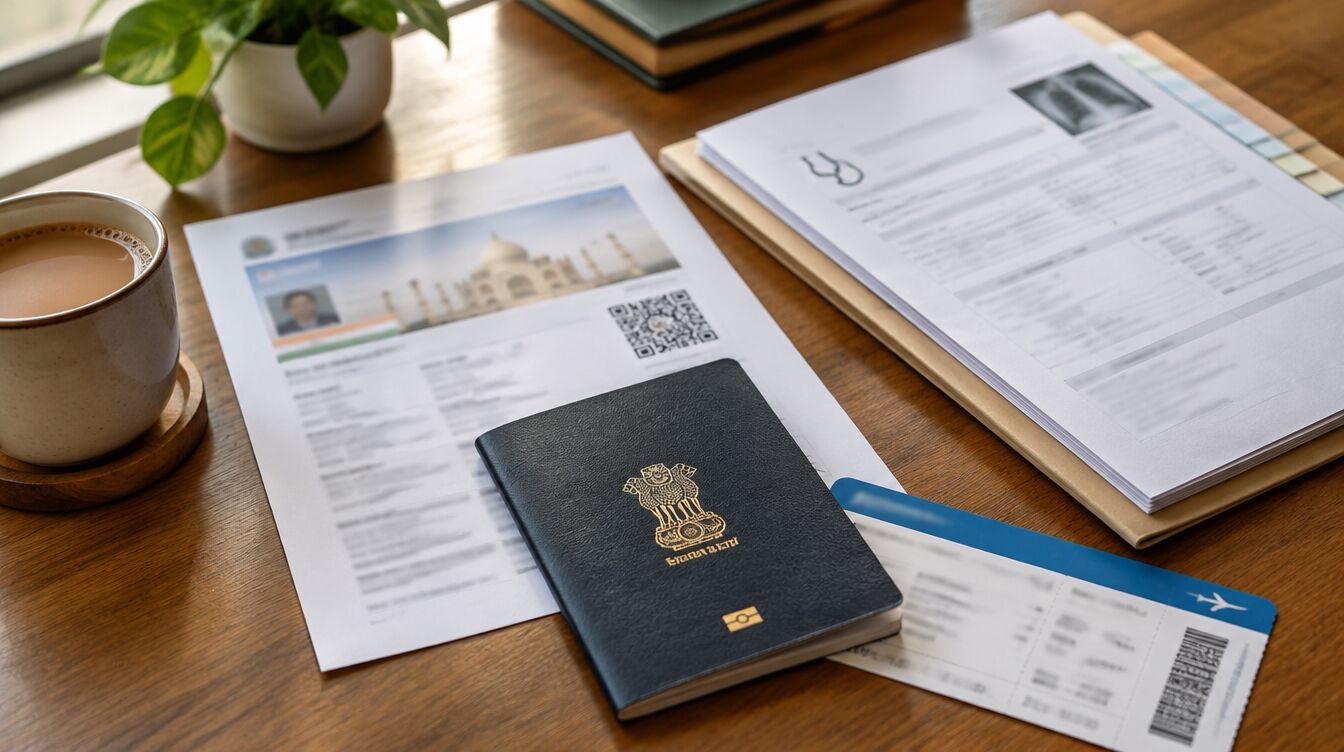
Glossary term · Tests & reports
Discharge summary (also: Discharge report, Discharge letter, Discharge plan): A discharge summary is the written record a hospital gives when a patient leaves, describing the diagnosis, treatment, medicines and follow-up instructions.
A discharge summary is the hospital’s written account of what was done and what happens next. For an international patient it is the single most important document to carry home. MedlinePlus says a discharge plan should list all medicines and how to take them, appointments and who to call with problems. Your doctor at home will rely on it.
What should it include?
- Your diagnosis and the procedure performed, with dates.
- Any complications and allergies.
- All medicines, with doses and timing, and which old medicines to stop or change.
- Wound and dressing care.
- What you can eat and how active you can be.
- Follow-up appointments and tests.
- Who to call with questions or an emergency.
Why it matters when you fly home
The US CDC advises patients to request copies of their overseas medical records in English and share them with clinicians at home. The discharge summary is the starting point. Ask for operation notes, implant details and copies of key scans as well.
Check before you leave
Discharge is a high-risk point for misunderstanding. AHRQ advises plain-language discharge instructions and the teach-back method, where you repeat the instructions in your own words. Ask for an interpreter if needed.
Keep digital copies
Photograph or scan every page before you leave the hospital. Store it with your passport copy and share it with your doctor at home.
Questions people ask
Can I get the discharge summary in my own language?
Ask the hospital which language the summary will be in and whether its international desk can arrange a translation. Keep the original either way. Your doctor at home may need a certified translation.
What if a medicine on the summary is not sold in my country?
Ask the hospital before you leave for the generic name of each medicine. Your doctor at home can then prescribe an equivalent. Carry enough medicine for the journey and the first days at home.
Sources
- MedlinePlus: Leaving the hospital, your discharge plan
- CDC Yellow Book: Medical tourism
- AHRQ: Improving patient safety for patients with limited English proficiency
General information, not medical or legal advice. Rules change: confirm with the official source. Your treating specialist decides on suitability, treatment and length of stay. How we write and check.