

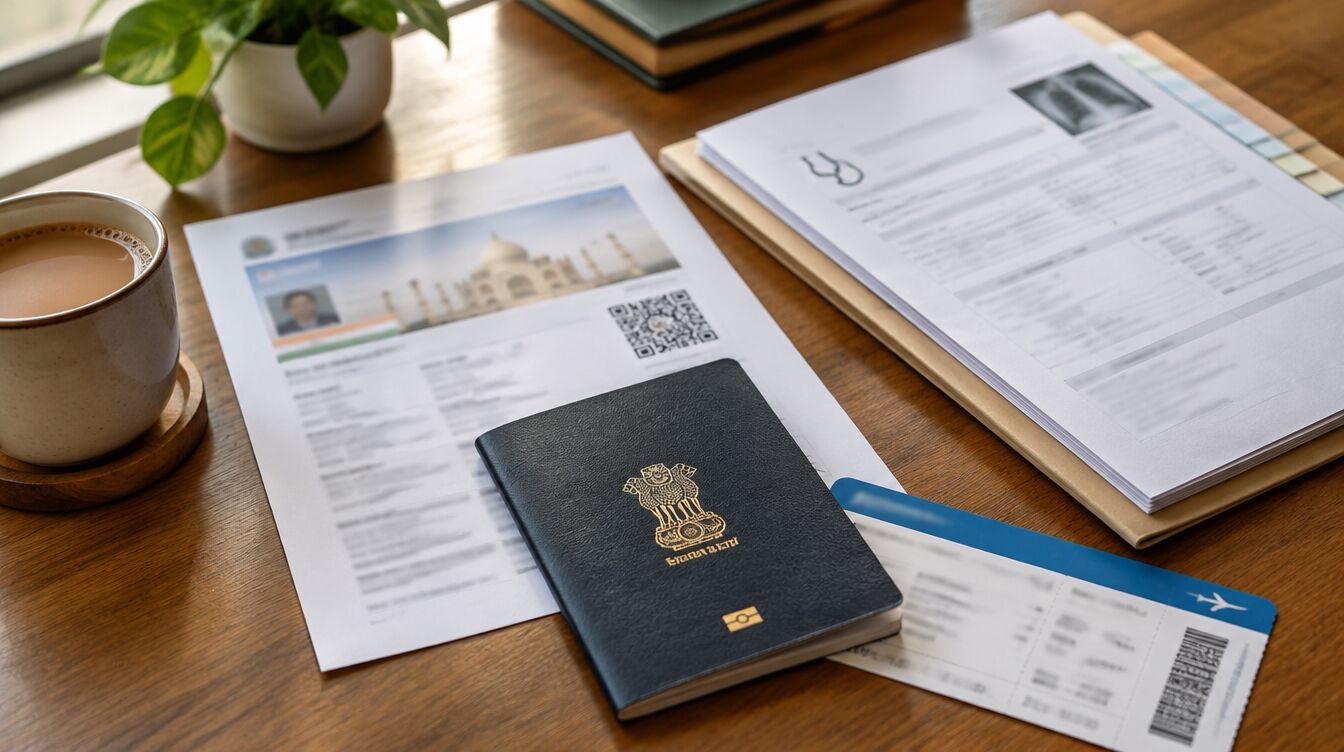
Checklist
Follow-up care at home starts before you leave India. Arrange a doctor at home who agrees to see you, and give them your discharge summary, reports and images. Keep taking medicines exactly as prescribed. Know the warning signs that need urgent help. Keep a way to contact the treating team in India for questions.
CDC advises medical travellers to plan follow-up care before they go, including confirming that a provider at home can see them on their return. Complications can appear after the flight, and care at home may be the first place they are noticed. This checklist helps you hand over care cleanly. It does not replace instructions from your treating specialist, which always come first.
What should you arrange before you travel?
- Tell your family doctor about the planned treatment and ask whether they will provide follow-up.
- Ask whether a local specialist will see you after your return and how referral works.
- Check what your health insurance at home covers for follow-up after treatment abroad.
- Arrange help at home for the first period after you return.
- Book time off work that allows for a delayed return flight.
What should you hand to your doctor at home?
- The discharge summary and operation or procedure notes.
- All test reports and images, with images in DICOM format where possible.
- Implant cards or device details if any were fitted.
- The medicine list with doses and the date each medicine started.
- The treating doctor’s name, email and hospital contact details.
- Translations into your language if your doctor needs them.
What should you do each day at home?
- Take medicines exactly as written and do not stop any medicine without advice.
- Wash your hands before touching a dressing and follow the dressing schedule you were given.
- Do not remove stitches or staples yourself.
- Follow the activity limits in your discharge instructions.
- Keep a short daily note of temperature, pain, wound appearance and any new symptoms.
- Do the exercises your physiotherapist set, at the pace they set.
When should you seek help?
- More redness, swelling, pain or bleeding around a wound.
- Drainage that increases, smells bad or turns thick, green or yellow.
- Fever, especially if it lasts for several hours.
- New breathlessness, chest pain or calf pain and swelling: seek emergency care.
- Any warning sign your treating team listed for your procedure.
- Uncertainty about a medicine or symptom: contact your doctor at home or the treating team.
Tip: print this page or save it as a PDF from your browser’s print menu.
Who is responsible for my care once I am home?
Once you are home, your local doctor or specialist leads day-to-day care. The treating team in India can often answer questions and review reports remotely. Agree before you leave how to contact them and how quickly they usually reply. In an emergency, always use local emergency services first.
MedlinePlus warning signs for surgical wounds
MedlinePlus advises calling your surgeon if there is more redness or pain, swelling or bleeding, a larger or deeper wound, a dark or dried-out wound, drainage that increases or changes colour or smell, or a temperature above 100°F (37.7°C) for more than four hours.
Questions people ask
Will my doctor at home look after me after surgery abroad?
Many doctors will, but it helps to ask before you travel. Bring complete records, including operation notes and images, so they can understand what was done. If your doctor declines, ask who else can see you and arrange it before your flight home.
Can the Indian hospital do follow-up by video?
Many hospitals offer review by video or by reviewing reports sent from home. Ask the treating team what follow-up they provide, how to share new reports securely and who to contact if you are worried. Local in-person care remains essential when an examination is needed.
Sources
- CDC – Medical tourism: travel to another country for medical care
- MedlinePlus – Surgical wound care: closed
- MedlinePlus – Leaving the hospital: your discharge plan
General information, not medical or legal advice. Rules change: confirm with the official source. How we write and check.