

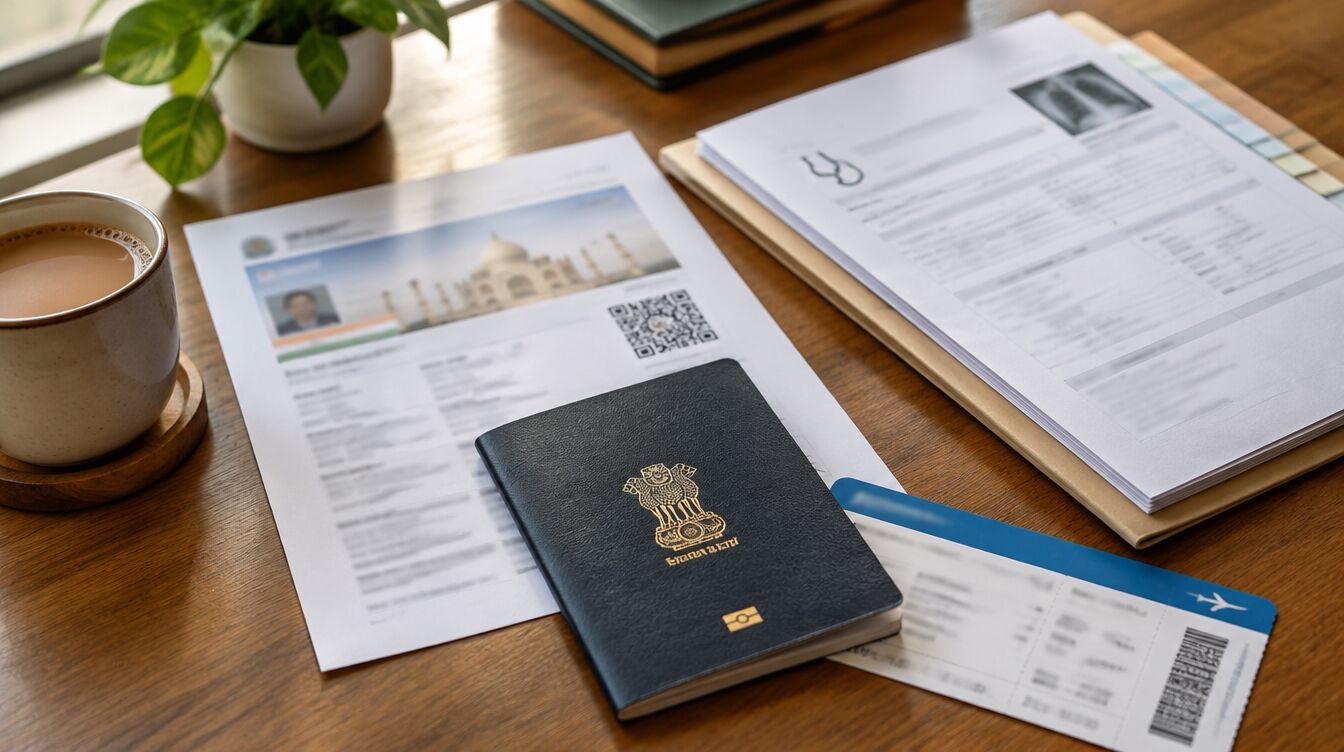
Checklist
Before leaving hospital in India, make sure you have a written discharge summary, a full medicine list showing what is new or changed, wound care instructions, follow-up dates and a contact for questions. Collect copies of all reports and images. Ask your treating specialist what you may and may not do, and when it is safe to fly.
Discharge from a hospital abroad is not the end of care. You will continue recovering in a hotel and then at home, where a different doctor may take over. MedlinePlus describes a discharge plan as a list of what you will need and need to do after you leave, made together by staff, the patient and family. Use this checklist on the day before discharge. It gives the attendant time to ask questions while the team is still at the bedside.
Which documents should you collect?
- The discharge summary, signed, with the diagnosis, procedure done, dates and treating doctor’s name.
- Operation notes or procedure reports if a procedure was performed.
- Copies of all test results, histopathology reports and imaging reports.
- Images on disc or a secure download link in DICOM format where possible.
- Implant details, such as stent, valve or joint make and serial number, if any were used.
- A fitness-to-fly letter if the airline or insurer needs one.
- The final itemised bill and payment receipts.
What do you need to know about medicines?
- A full list of medicines with dose, timing and how long to take each.
- Which medicines are new, which have changed and which have stopped.
- Enough supply to last until you can see your doctor at home.
- Whether each medicine is available in your home country and under what name.
- Prescriptions written in generic names for customs and for your home pharmacy.
What instructions should be in writing?
- How to care for the wound or dressing and when stitches or staples come out.
- What you can eat and drink.
- How active you can be, including stairs, lifting, bathing and driving.
- Which warning signs mean you should contact the team urgently.
- Who to call with questions, with a phone number that works after you leave India.
What follow-up should be arranged?
- The date of any review visit before you fly home.
- Whether a teleconsultation with the treating doctor can be arranged later.
- What your doctor at home should check and when.
- Equipment you will need, such as a walker, shower chair or dressing supplies.
- Physiotherapy or rehabilitation instructions to continue at home.
Tip: print this page or save it as a PDF from your browser’s print menu.
Who should be in the room at discharge?
The attendant should hear the discharge instructions too. MedlinePlus advises that both the patient and the caregiver read and understand them. If language is a barrier, ask for an interpreter and ask the nurse to check understanding by having you repeat the key points back.
When can you fly?
Only your treating specialist can say when it is safe to fly. Ask for this decision in writing and check whether your airline needs its own medical form.
Questions people ask
What should a discharge summary from an Indian hospital include?
It should state your diagnosis, the treatment or procedure done, key test results, the medicines you are going home with and follow-up instructions. It should carry the treating doctor’s name and the hospital’s details. Check it before you leave and ask for corrections if anything is missing.
Can I get my scans on a USB or online?
Many hospitals can provide images on disc or through a secure download link. Ask a day before discharge, as copying can take time. Ask for the images in DICOM format, which doctors at home can usually open, as well as the written reports.
Sources
- MedlinePlus – Leaving the hospital: your discharge plan
- MedlinePlus – Surgical wound care: closed
- CDC – Medical tourism: travel to another country for medical care
General information, not medical or legal advice. Rules change: confirm with the official source. How we write and check.