

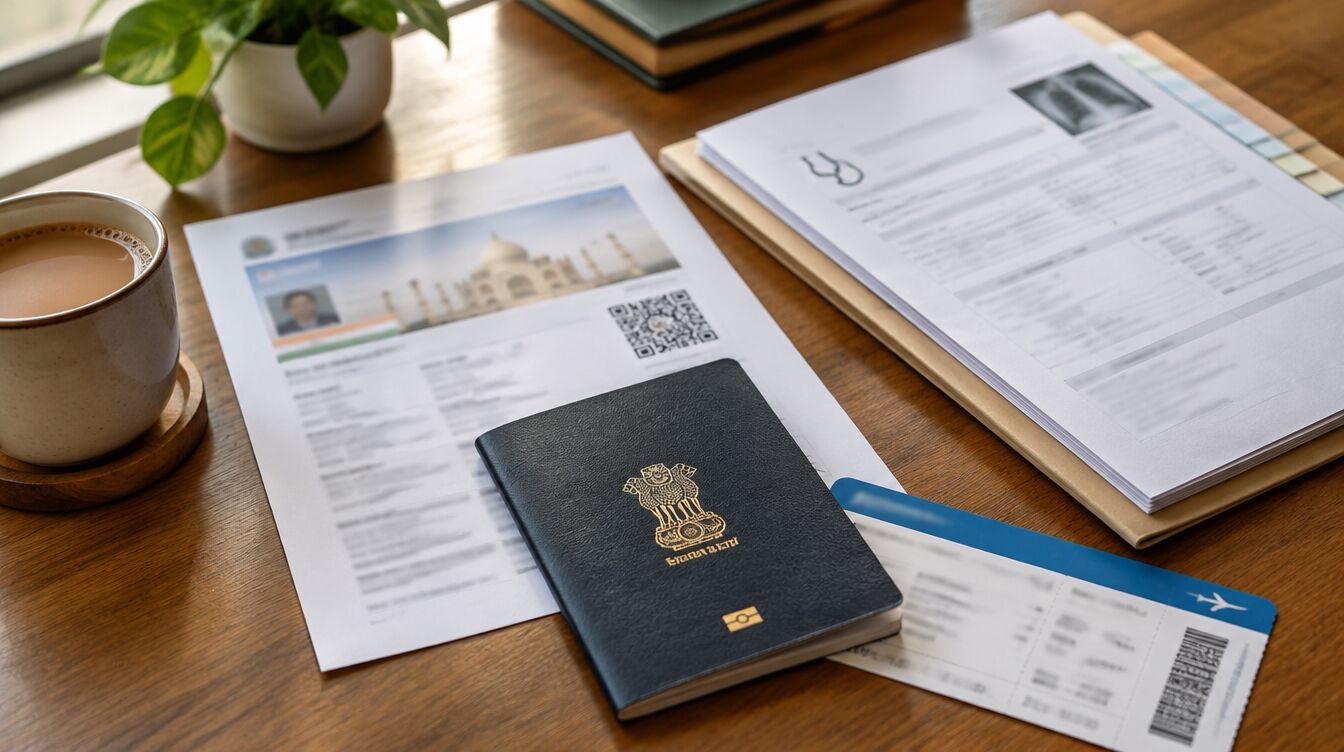
Checklist
For a transplant evaluation, the recipient sends diagnosis reports and recent tests, and the near-relative donor sends their own health reports. Transplant teams commonly check blood group, tissue type (HLA), antibodies, infections, heart and lung health. Send what you already have. Each transplant centre sets its own list, and the team decides which tests to repeat in India.
NHS Blood and Transplant lists the tests usually done before a kidney transplant: blood group, tissue typing, antibody tests, checks for infections such as HIV and hepatitis B and C, heart tests, lung tests and sometimes cancer screening or a psychological review. It also notes that each centre has its own requirements. Living donors go through their own medical tests to confirm they are fit and healthy enough to donate. In India, the legal paperwork runs alongside the medical file. See our separate documents checklist for Form 21 and the authorisation committee.
Which recipient reports should you send?
- A letter from your specialist stating the diagnosis and current treatment.
- Recent kidney or liver function tests, with dates.
- Dialysis details, if you are on dialysis: type, frequency and start date.
- Blood group report.
- Any HLA typing or antibody results already done.
- Recent ultrasound, CT or MRI reports of the affected organ.
Which heart, lung and infection tests help?
- ECG and echocardiogram reports.
- Stress test report, if you have had one.
- Chest X-ray report.
- HIV, hepatitis B and hepatitis C test results.
- Any recent infections and how they were treated.
Which donor reports should you send?
- Donor’s blood group report.
- Donor’s recent blood tests, including kidney or liver function.
- Donor’s blood pressure, weight and any medical conditions.
- Donor’s list of medicines.
- Note the donor’s exact relationship to the recipient.
What other history matters?
- Previous transplants, pregnancies or blood transfusions, which can affect antibodies.
- Past cancers and their treatment.
- Diabetes, heart disease or vascular disease.
- Any previous abdominal surgery.
- Vaccination records, if available.
Tip: print this page or save it as a PDF from your browser’s print menu.
Near relatives only
For foreign nationals in India, a living donor must be a near relative, the relationship must be certified by the embassy on Form 21, and the hospital’s authorisation committee must approve. IndiaMedica never sources donors.
Questions people ask
Why do transplant teams ask about past transfusions or pregnancies?
These can lead to antibodies that make matching harder. NHS Blood and Transplant explains that high antibody levels make it harder to find a suitable donor. Telling the team early helps them plan the right tests.
Does the donor need to send reports before travelling?
It helps. Basic donor reports let the team judge whether the evaluation is worth starting. Full donor testing is then done at the transplant hospital, which decides whether donation is safe for the donor.
Are HLA and DNA tests the same?
No. HLA typing assesses tissue match. DNA profiling may be used to confirm a genetic relationship for legal purposes. The Goa state transplant checklist lists both, from an NABL-accredited laboratory.
Sources
- NHS Blood and Transplant: Kidney transplant tests
- NHS Blood and Transplant: Living donor kidney transplant
- SOTTO Goa (Government of Goa): Living donor transplant checklist
General information, not medical or legal advice. Rules change: confirm with the official source. How we write and check.