

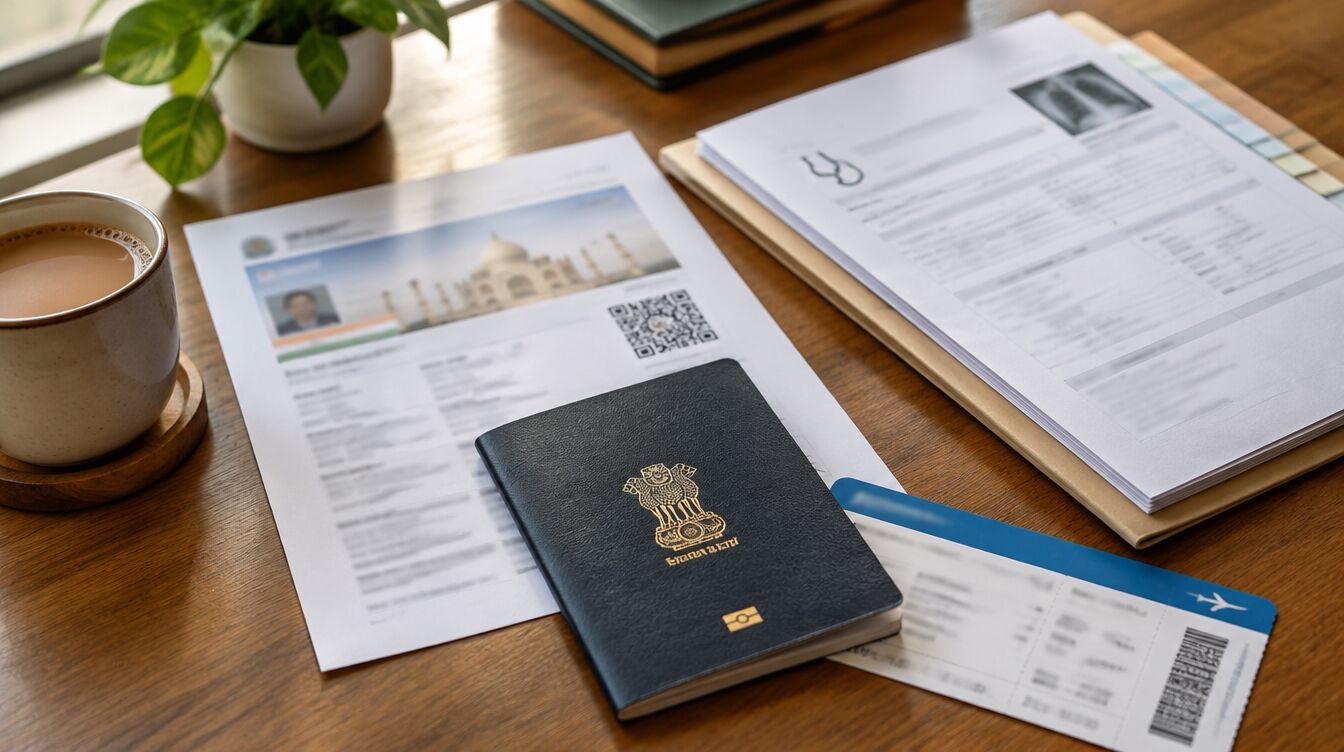
Checklist
For an eye surgery opinion, send your recent eye examination report, past spectacle or contact lens prescriptions, any eye scans, details of previous eye surgery or eye conditions, and a list of general health conditions and medicines. For laser vision correction, a history of prescriptions matters because surgeons look for a stable prescription. Final measurements are always taken in person.
Eye surgery is planned from precise measurements. The NHS explains that before cataract surgery a specialist examines and measures the eye, and that cataracts in both eyes are treated on separate days. Moorfields Eye Hospital notes that suitability for laser eye surgery depends on a stable prescription and on the thickness and shape of the cornea, which are checked with scans. Reports from home help the surgeon judge whether a trip is worthwhile. The decisive measurements are repeated in India, so do not be surprised if tests are done again.
Which eye reports should you send?
- Your most recent full eye examination report from an optometrist or ophthalmologist.
- Visual acuity and eye pressure readings, if recorded.
- Any OCT, retinal photograph or corneal topography reports.
- Ultrasound or other scans of the eye, if done.
- Referral letter stating the suspected diagnosis.
What prescription history helps?
- Spectacle prescriptions from the last few years, with dates.
- Contact lens type and how long you have worn them.
- For laser surgery enquiries, any record showing changes over time.
- Ask the clinic whether you must stop contact lenses before measurements in India.
What eye history should you include?
- Previous eye surgery or laser treatment, with dates and reports.
- Eye conditions such as glaucoma, retinal problems or lazy eye.
- Eye injuries or infections in the past.
- Which eye troubles you more, and how it affects reading, driving or work.
Which general health details matter?
- Diabetes, high blood pressure or other long-term conditions.
- All current medicines with generic names, including eye drops.
- Blood thinners, clearly marked.
- Allergies to medicines or eye drops.
- Whether you can lie flat for a short procedure.
Tip: print this page or save it as a PDF from your browser’s print menu.
Plan both eyes in advance
If both eyes need cataract surgery, the NHS notes they are treated on separate days. Ask the surgeon how they plan the second eye, as this affects how long you stay in India.
Questions people ask
Why are my old spectacle prescriptions useful?
They show whether your eyesight has been stable. Moorfields notes that surgeons want evidence of a stable prescription before laser surgery. For cataract surgery, they also help the surgeon understand your vision before the cataract developed.
Will the hospital repeat my eye measurements?
Yes, usually. The NHS describes an appointment where a specialist examines and measures the eye before cataract surgery, and the hospital will take its own measurements. Reports from home help with the first opinion, not the final plan.
Can I have cataract surgery and fly home soon after?
Ask your eye surgeon. They decide when it is safe to fly after examining your eye. Tell them your planned travel dates early so the follow-up checks can be scheduled.
Sources
- NHS: Cataract surgery
- Moorfields Eye Hospital NHS Foundation Trust: Who is not suitable for laser eye surgery
General information, not medical or legal advice. Rules change: confirm with the official source. How we write and check.